When Your Job Doesn’t Fit The Person You’ve Become: How To Pivot Without Losing Momentum
Contributed by: Nikki St. Martin
VP of Marketing, The Jacobson Group
You can feel it before you can explain it. A job that used to feel like the right place to grow starts to feel cramped, almost like the walls shifted slightly while you weren’t looking. Tasks that once absorbed you turn flat. Meetings drain energy instead of sharpening focus. You pick up signals you didn’t notice years ago. Your interests have drifted, your values reshaped themselves, and the version of you showing up each morning isn’t the one who accepted the role. It’s not burnout. It’s evolution pressing against outdated expectations, and momentum doesn’t always protect you from the friction.
A pivot doesn’t require burning everything down. Most people don’t need reinvention. They need alignment. Careers tend to lag behind the shifts inside them. And the moment you acknowledge the mismatch, your next move becomes less mysterious than it seems.
RECOGNIZING WHEN YOUR ROLE NO LONGER REFLECTS WHO YOU ARE
Professionals often ignore early signs because nothing is technically wrong. The job still functions. The team still relies on you. Yet there’s a quiet internal disconnect, something you notice when you hesitate before starting work you used to breeze through. You sense your strengths aren’t being used the way they could be. Some days you feel like you’re playing a character you’ve outgrown.
Coaches and recruiters see this pattern constantly. Even insurance recruiters, who work across industries that evolve at odd speeds, talk about candidates who matured faster than their roles allowed. The mismatch isn’t failure; it’s a natural outcome of years spent learning and adapting. When that internal shift gets strong enough, ignoring it drains more energy than addressing it.
UNDERSTANDING WHERE YOUR SKILLS WANT TO GO NEXT
A pivot starts with sorting through what you’ve built so far. Skill mapping isn’t glamorous, but it clarifies the real story you bring to the table. Write down abilities you rely on without thinking. Add the ones you developed by accident. Include the things colleagues come to you for, that is, patterns you might overlook because they feel too easy.
Then sort the list by energy, not prestige. High-energy skills point toward the roles you grow into, not away from. Low-energy ones reveal the work you’re ready to leave behind. Most professionals discover clusters they didn’t expect — operational instincts paired with creative problem solving, or interpersonal strengths hiding beneath technical work. Those clusters often reflect the next version you’re becoming.
DEFINING THE IDENTITY BEHIND YOUR NEXT MOVE
Shifting careers isn’t about chasing the most interesting role. It’s about matching your direction with your developing sense of who you’re becoming. That identity reveals itself in surprising places: what you research in your spare time, the conversations that keep you engaged, the types of problems you lean toward when given options.
Once you recognize those threads, you can evaluate opportunities through a different filter. You’re not deciding what you want to do. You’re deciding who you want to be. And when that clicks, the path forward becomes much easier to navigate.
TRANSLATING YOUR EXPERIENCE INTO NEW CAREER LANGUAGE
Most professionals underestimate the portability of their achievements. They assume a pivot requires starting over, but often it’s a matter of reframing. A logistics leader who manages uncertainty can transition into risk-related roles. A team lead who excels at cross-functional alignment can step into strategy or operations.
Context is what shifts, not your competence. The trick is learning the language of the field you’re entering. Industry terms change. Expectations change. But the proof of your work stays solid. List the results you delivered, not the tasks you performed. Decision makers latch onto outcomes.
This is where conversations help. People in your desired industry can give you the vocabulary, the nuances, even the unwritten norms that make your story feel credible.
BUILDING REAL RELATIONSHIPS INSTEAD OF GENERIC NETWORKS
Networking often collapses under its own pressure because it’s treated like a numbers game. A more humane approach works better. Choose a few people who represent the space you’re moving toward and reach out with real curiosity. Ask about their path. Ask what surprised them. Ask what skills carry the most weight in their world.
These conversations shape your understanding more than any online search. They show you what the field values, what gaps exist, and which of your strengths translate cleanly. Over time, the relationships become more natural. People start thinking of you when they see opportunities that match your direction.
MAKING SPACE FOR EXPERIMENTS AS YOU SHIFT IDENTITY
Career transitions feel burdensome when they’re framed as irreversible decisions. Experiments reduce the pressure. Take on a short-term project slightly outside your comfort zone. Shadow someone whose role interests you. Enroll in a workshop that tests the skills you think you want to use.
Small experiments uncover what fits and what only looks appealing from a distance. They also build confidence slowly, which is usually how confidence grows best. You’re not betting your future on one choice. You’re gathering data.
LETTING YOUR EXTERNAL IDENTITY CATCH UP TO YOUR INTERNAL ONE
As you evolve, your professional identity starts shifting quietly. Update your portfolio, bio, or online profile not in a single overhaul but gradually, one sentence at a time. Share insights tied to your new direction. Volunteer for assignments that reflect who you’re becoming.
People adjust faster than you think. Once they see the pattern, your pivot looks intentional instead of abrupt. The story you tell about your career starts to move with you, which makes opportunities feel more attainable.
KEEPING MOMENTUM WITHOUT FORCING SPEED
A pivot rarely happens in one clean arc. It’s a sequence of steady steps: conversations, experiments, skill development, shifts in presentation, moments of recalibration. Professionals who move successfully give themselves permission to build at a sustainable pace. Momentum comes from consistency, not intensity.
In the end, when a job stops fitting, it’s not a signal to retreat. It’s an invitation to realign. The person you’re becoming has already outgrown the limits of the role behind you. The pivot is simply the moment you decide to follow that growth and give it the space it’s been asking for.
About the author
Nikki St. Martin is VP of Marketing for The Jacobson Group, the premier insurance talent acquisition firm in the country. St. Martin is responsible for the ongoing marketing and branding efforts of The Jacobson Group.
Sources
- https://redshoemovement.com/reinvention-roadmap-how-you-can-pivot-careers-without-losing-momentum/
- https://executiveeducation.wharton.upenn.edu/thought-leadership/wharton-at-work/2023/11/surviving-a-career-pivot/
—End of collaborative post—
Free self-development courses
👇
 |
 |
Free life guides
👇

Best-selling Self-development courses by Dean Bokhari
Kill procrastination.
|
Get motivated.
|
Connect with anyone.
|
freshly pressed:
Top Audiobooks narrated by Dean Bokhari on audible | |


Book summaries
- The Power of Habit by Charles Duhigg
- 12 Rules for Life by Jordan B. Peterson
- Presence by Amy Cuddy
- Leaders Eat Last by Simon Sinek
- The ONE Thing by Gary Keller, Jay Pasan
- Deep Work by Cal Newport


NAV

listen + subscribe



Overcome fear, beat procrastination, and accomplish your greatest goals with this 30-day success program by Dean Bokhari.
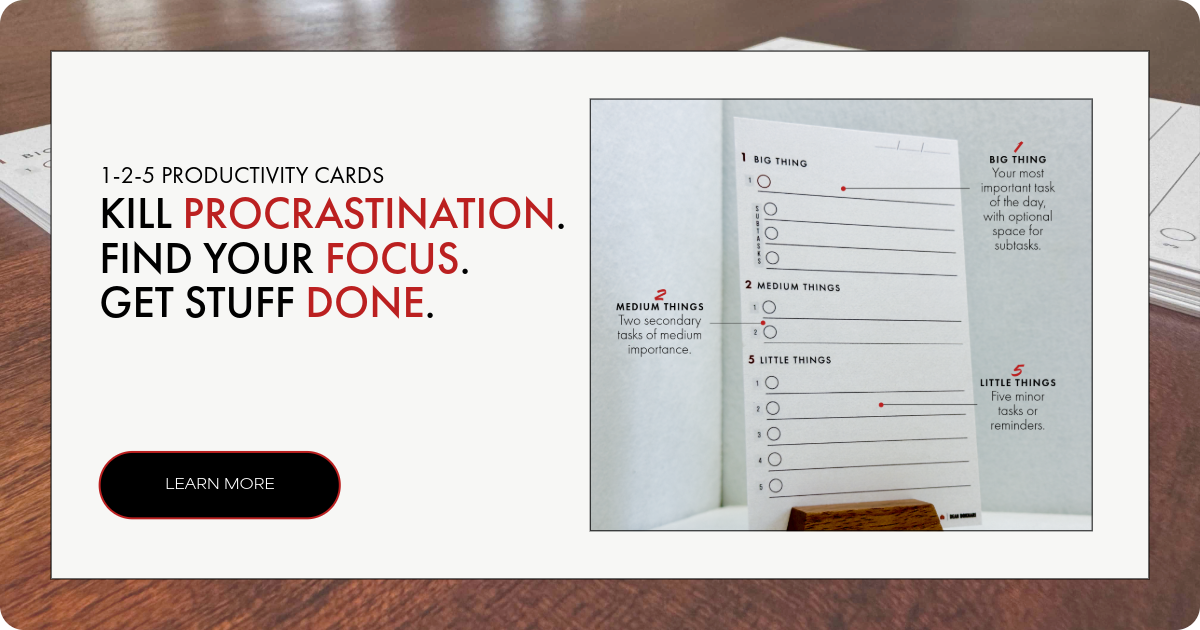
1-2-5 Daily Productivity Cards.

Gratitude Journal for men
BOOK LISTS
Free Self-Improvement Books + Guides
Popular guides
top podcasts




POPULAR SELF-DEVELOPMENT ARTICLES + PODCASTS:
The Ultimate Guide to Overcoming Lack of Motivation + Energy
10 Things to Remember if You Want to Do What You Love for a Living
7 Life-Changing Benefits of Weight Lifting
Design The Perfect Morning Ritual
Use Outcome Thinking To Get What You Want