Why ‘More’ Isn’t Always Better When It Comes to Self-Improvement
Collaborative Post
Self-improvement is pretty much everywhere now… you’re told to train harder, work longer, optimise your habits and monetise your hobbies… And for a while, this way of thinking can be quite motivating, and when you’re doing it, you’ll feel proactive, focused, and committed to basically becoming a better version of yourself.
But over time, a lot of people actually start to notice something else happening - the more they add, the harder it all becomes to stay consistent, and in the end, having more goals just means they’re under more pressure. At that point, they’ll start to take shortcuts or skip things entirely, and what was good becomes detrimental overall. With that in mind, keep reading to find out why more isn’t always better when it comes to self-improvement.

Why Doing Everything Often Leads To Doing Nothing Well
The fact is, when you try to improve every area of your life all at once, your attention is going to be split between it all, so you might be thinking about training, nutrition, work, sleep, your social work, your emotions, and plenty more. Now all of these things are important, but none of them are going to be much good if they’re competing for attention with everything else.
In the end, the people who make good progress are the ones who simplify whatever it is they need to do - they’ll make sure they focus on fewer things as priorities, and those are the things they’ll give proper attention to so they’ll be done well. Everything else can wait.
Self-Improvement Works Best When It’s Practical
A lot of self-improvement advice sounds impressive, but it doesn’t actually fit into real life very well. After all, perfect routines, strict rules, and all-or-nothing plans are fantastically exciting, and they should get you where you want to end up, but how are you going to maintain them? How are you even going to get started? All you’re doing by working with these ideas is setting yourself up for disappointment and failure, which in turns means you’ll lose motivation to do much else.
Practical improvement is different, though. It’s about making choices that are actually realistic and, crucially, can be repeated, and it could include things like training plans you can stick to and nutrition habits that you won’t get bored with (and that taste good too!).
This could also be where people start looking for ways to support their progress with additional help, and in some cases they decide to buy Anavar online as part of an informed fitness approach - that can work better than constantly trying to add more to your fitness routine or going to extremes to get the results you want. That way, you can change your focus from doing more to doing less, but doing what works for you.
More Effort Isn’t The Same As Better Results
It’s easy to assume that if your progress slows down, the answer to fix the problem has to be more intensity and more effort in whatever it is you’re doing. So you’ll start to do more workouts, or you’ll put more restrictions in place in various areas of your life, and so on. But guess what? This pathway doesn’t work, and that’s because no matter how much effort you put in, if there’s no direction behind it, you’re still not going to get anywhere. You’ll just get really tired.
The fact is that better results usually come from making better decisions, which means you need to start by looking at what’s already in place, and then adjusting that, rather than just piling more on top. If you can understand when something needs a bit of support rather than focusing on the fact that it’s not working for you, then you’ll be in the right place, doing the right work to make things better.
Consistency Beats Intensity Over Time
When you think about it, most long-term progress is pretty boring - but that’s not actually a bad thing. It just means it’s consistent, predictable, and, the really important part to remember, sustainable. The people who get good results probably won’t feel like they’re constantly at the edge of what they can manage, and instead they’re just repeating habits that fit into their lives without any problems or having to go out of their way to make it happen.
The truth is that when your improvement strategies are too intense, they’re not going to last, but when they’re nicely balanced, they will. It’s that simple, and speaking of simple, simplifying what you’re doing is what’s probably going to lead to the best outcomes in the end.
Choosing Tools With Purpose, Not Impulse
There’s nothing wrong with using various handy and helpful tools to support your goals, but what you need to think about is the purpose of those tools, and make sure you’re not just adding them to your life because someone mentioned you should or you saw an influencer using them, and so on. The fact is, adding something that fits into your plans is very different from adding something just because.
When people think about all this properly, no matter what it might be, the results tend to be more controlled and predictable, and you won’t have to get stressed about the tools you initially put in place to help you. What’s the point of that?
Rest And Recovery Are Part Of The Process
One of the biggest mistakes in self-improvement is thinking that taking a break or having a rest is a sign of weakness. In reality, taking a break to recover is what means we can keep going and make sure our efforts actually achieve something. Without rest, progress tends to stop because you’re literally too tired to do anything else.
So in this case, doing less is best, and it’ll give you a chance to notice what’s working and what isn’t, as well as giving you time to think things through and adjust your plans if necessary. That’s going to lead to better decisions - and better outcomes - overall.
—End of Collaborative Post—
Free self-development courses
👇
 |
 |
Free life guides
👇

Best-selling Self-development courses by Dean Bokhari
Kill procrastination.
|
Get motivated.
|
Connect with anyone.
|
freshly pressed:
Top Audiobooks narrated by Dean Bokhari on audible | |


Book summaries
- The Power of Habit by Charles Duhigg
- 12 Rules for Life by Jordan B. Peterson
- Presence by Amy Cuddy
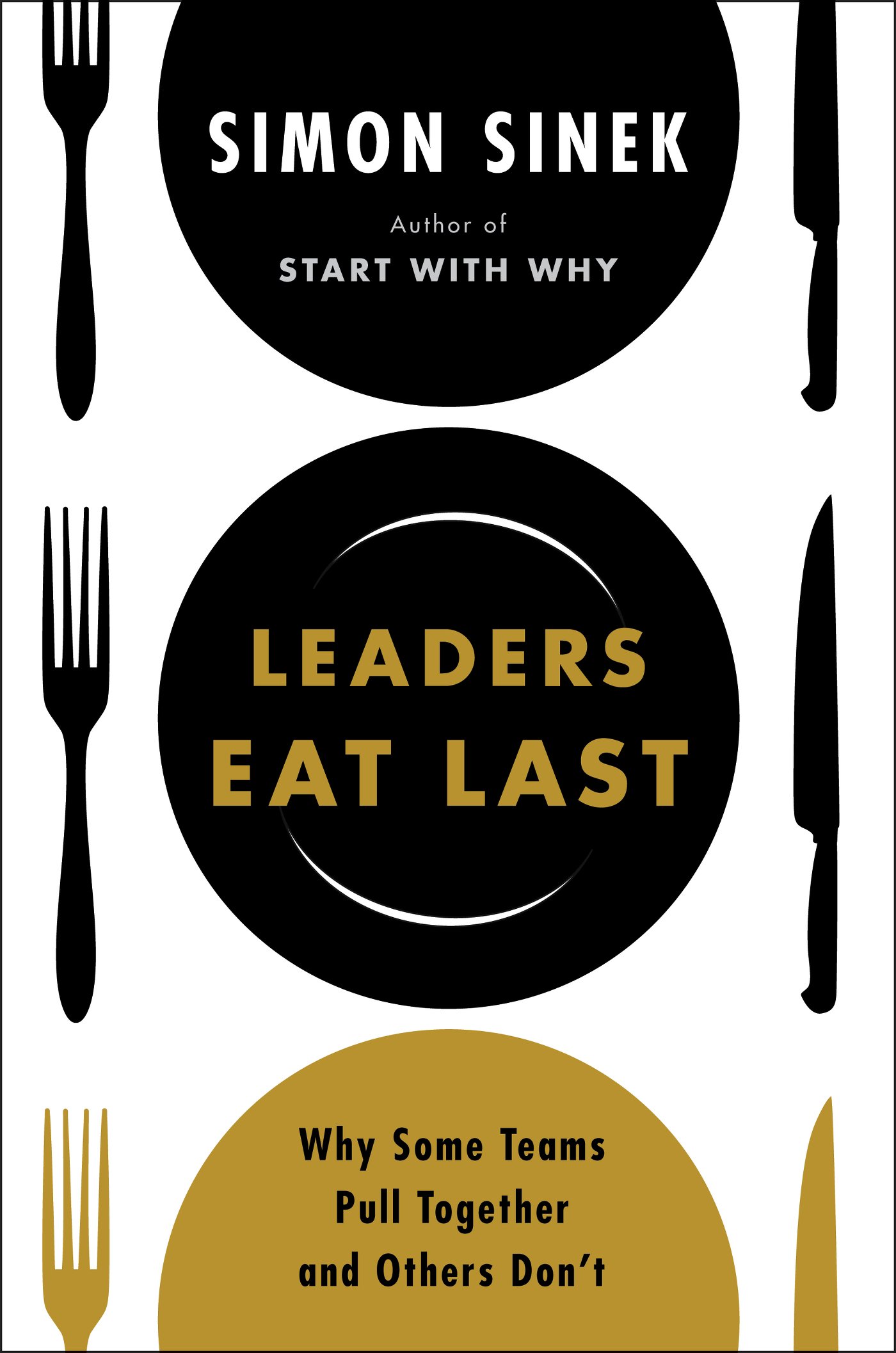
- Leaders Eat Last by Simon Sinek
- The ONE Thing by Gary Keller, Jay Pasan
- Deep Work by Cal Newport


NAV

listen + subscribe



Overcome fear, beat procrastination, and accomplish your greatest goals with this 30-day success program by Dean Bokhari.
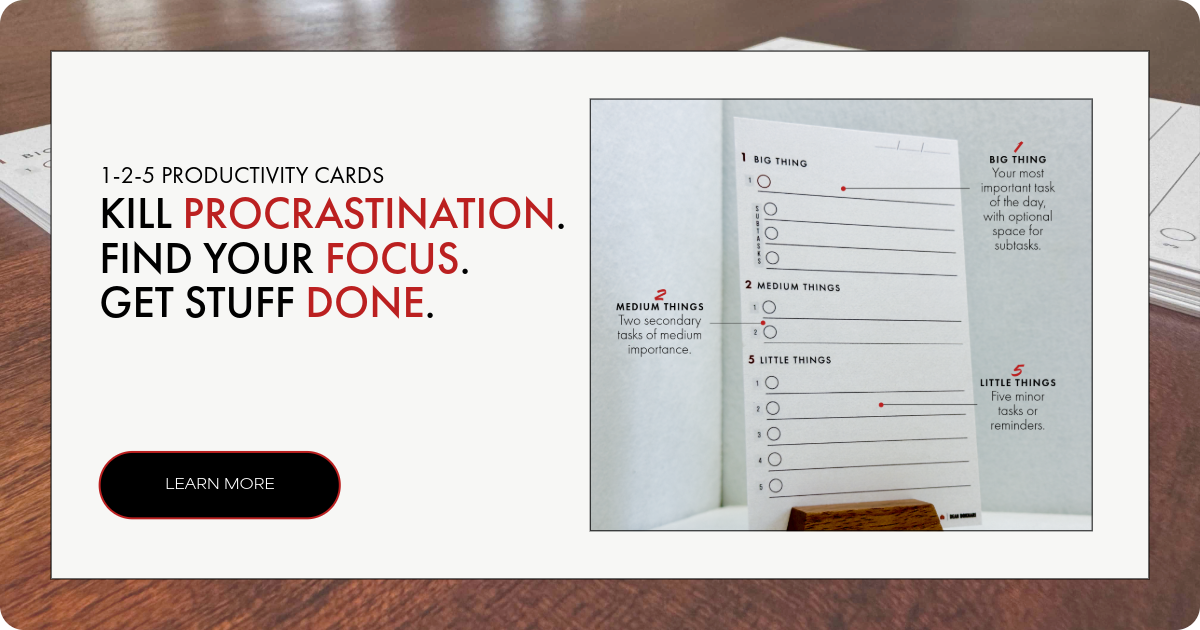
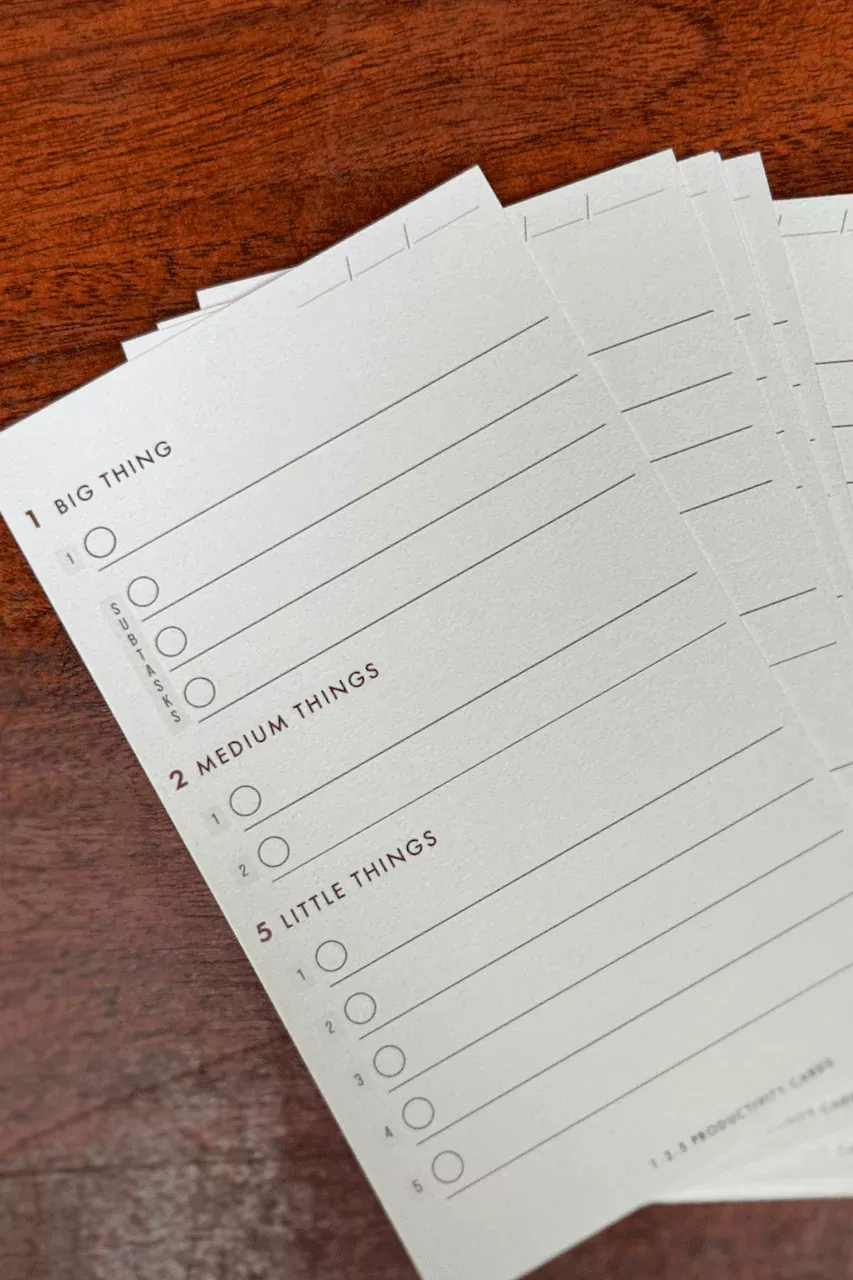
1-2-5 Daily Productivity Cards.
Gratitude Journal for men
BOOK LISTS
Free Self-Improvement Books + Guides
Popular guides
top podcasts


POPULAR SELF-DEVELOPMENT ARTICLES + PODCASTS:
The Ultimate Guide to Overcoming Lack of Motivation + Energy
10 Things to Remember if You Want to Do What You Love for a Living
7 Life-Changing Benefits of Weight Lifting
Design The Perfect Morning Ritual
Use Outcome Thinking To Get What You Want