Why Your Office’s
Timekeeping is Actually Costing You Money
Collaborative Post

Time’s money. Yeah, you’ve probably heard that phrase since you were a kid, right? That’s the classic line everyone throws around, and honestly, it can sound a bit overkill, right? But in the real world, tiny timing issues can nibble away at productivity and payroll way more than most offices notice. A lot of people complain about hybrid and remote teams costing money, but no, it’s micromanaging and nitpicking all these little things instead. And yeah, a lot of workplaces don’t even realize how messy their timekeeping is until something finally forces them to look a little closer.
Well, there’s this assumption that if everyone sorta shows up around the right time, clocks are hanging somewhere on the wall, shifts get covered, and people eventually go home, then everything’s fine. Sure, it does sound that simple, doesn’t it? But time loves to slide out of place in the smallest, most irritating ways. A minute here, two minutes there, and boom, those “no big deal” moments start piling up.
Especially when each department is living in its own little time zone.
Those “Little Minutes” aren’t Actually Little
You know how, when you spend a dollar here and a dollar there, those little dollars add up and just cost a whole bunch? Well, a couple of minutes late or early doesn’t feel like the end of the world. Nobody’s saying anyone needs to stand next to the clock like some sort of minute-counting hall monitor. But across dozens of people, every workday, every week? Yeah, that adds up fast.
And the funny part is, it’s often caused by something incredibly dumb. Like the break room microwave says 12:04, but the clock in the conference room says 12:01, and someone’s phone says 11:59. Who’s right? Who knows. People just pick whichever clock feels most flattering to them and go with that. So, clearly, it’s not like people are lazy; they’re just misinformed when all the clocks everywhere just don’t line up.
But you could consider investing in wireless synchronized clock systems for your office. A lot of offices basically have clocks that are all different times, and ideally, just try and avoid that. You know how at train stations and airports every single clock all matches, yeah, that’s the goal here.
Being Super Strict Doesn’t Fix it Either
Some workplaces go the total opposite route. You know the type. Watching every punch in and punch out like they’re guarding a national treasure. If you’ve ever worked at a factory or some sort of manufacturing facility, then you better believe that this is basically how they all operate. Employees get called out for clocking off literally one minute early.
Someone grabs a snack at 4:59, and somehow they’re Public Enemy #1. Clearly, it’s a horrible, toxic workplace environment, and some companies just stuck to their guns on that (well, maybe the management here to be more specific).
Like, needless to say, here, it’s ridiculous. People aren’t kids. They don’t need someone breathing down their neck for over sixty seconds. There’s life, there’s traffic, there’s “Oh no, I forgot my access badge,” and a thousand tiny things that make real humans real humans. A workplace shouldn’t treat people like they’re only valued down to the second. Because nothing crushes morale faster than obsessing over the tiny stuff that isn’t actually harming the business.
Confusion Wastes More Time than People Do
Oh yeah, it definitely needs to be addressed, so here’s the irony. A manager might freak out about an employee being two minutes off, but that same workplace might waste thirty minutes trying to get everyone into a meeting because clocks don’t line up. Like, “Are we late? Or early? Or is the meeting actually now? Or five minutes ago?”
It goes back to what was just said up above about the clocks not being synchronized. And so yeah, everyone’s confused, annoyed, and of course, nobody’s working. And time was supposed to be money, right? Well, yeah, timing mistakes cost more than a couple of minutes ever will. Besides, time shouldn’t feel like a puzzle people need to solve before they can do their job.
Again, syncing up your clocks solves this, and you could also consider display wall clocks in every room within your office for an extra layer of timekeeping. It’s all about making the time more visible while also ensuring that every timepiece syncs up.
Good Timekeeping isn’t About Control
Instead of control, which shouldn’t be in the first place because your employees are adults (assuming they are), it needs to be all about the flow itself instead. When the clocks match, everything feels smoother. People work together instead of guessing what everyone else is doing. Breaks line up. Well, that and meetings don’t fall apart before they start.
Plus, lunch hours don’t collide with something important. Ideally, none of this is about being controlling, because you shouldn’t do that, and no, none of this should even be about trying to squeeze productivity out of every second. Instead, it’s about not losing productivity to sheer confusion. Just bluntly put, it here, work has to feel coordinated; it really shouldn’t feel chaotic, or confusing, unclear, and especially rushed.
The Real Issue Here is Trust
When people feel like they’re constantly being judged down to the minute, they back off emotionally. They start to care less. They do the bare minimum. But why? Should it be the exact opposite? Maybe for some people, sure, but not everyone. It’s because being treated like a suspect never motivates anyone to do better. Besides, why should it anyway?
Respect and trust are what keep motivation alive. A couple of minutes isn’t hurting the business. But acting like a couple of minutes is a crime definitely does. Timekeeping should support people, not control them. It should keep the workplace fair, not stressful. It should help, not hover. Plus, it’ll get to the point where people won’t tolerate it; they’ll leave.
Avoid the Whole Surveillance Thing
No, Big Brother should not be watching. Besides, it’s creepy. Why micro-manage? Really, what good does any of that even do? So, instead, it just helps to have a time management system, but don’t guard it, don’t constantly look at it, don't constantly get onto staff for getting off a minute early, or a minute late. Just don’t do it.
—End of collaborative post—
Free self-development courses
👇
 |
 |
Free life guides
👇


Best-selling Self-development courses by Dean Bokhari
Kill procrastination.
|
Get motivated.
|
Connect with anyone.
|


freshly pressed:
Top Audiobooks narrated by Dean Bokhari on audible | |


Book summaries
- The Power of Habit by Charles Duhigg
- 12 Rules for Life by Jordan B. Peterson
- Presence by Amy Cuddy
- Leaders Eat Last by Simon Sinek
- The ONE Thing by Gary Keller, Jay Pasan
- Deep Work by Cal Newport


NAV

listen + subscribe




Overcome fear, beat procrastination, and accomplish your greatest goals with this 30-day success program by Dean Bokhari.
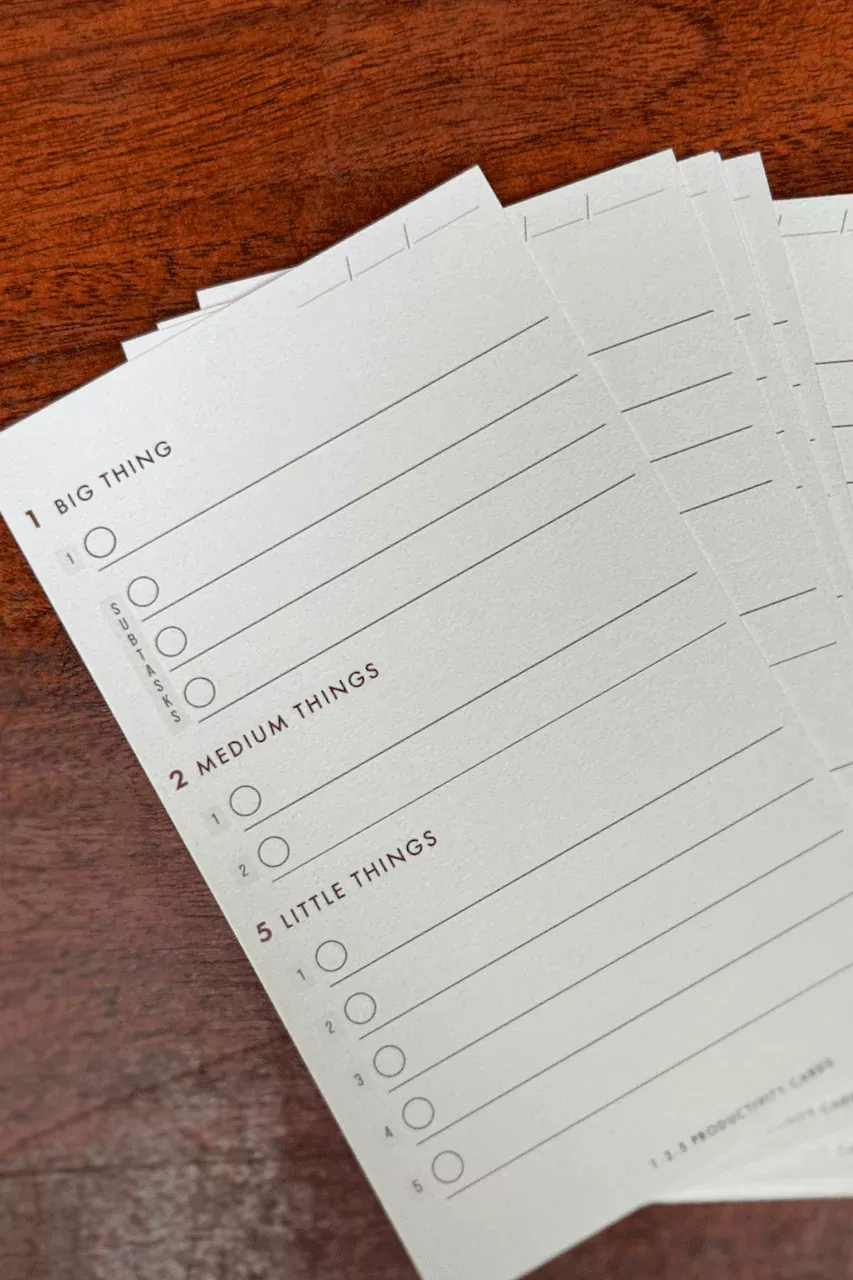
1-2-5 Daily Productivity Cards.
Gratitude Journal for men

BOOK LISTS
Free Self-Improvement Books + Guides
Popular guides
top podcasts





POPULAR SELF-DEVELOPMENT ARTICLES + PODCASTS:
The Ultimate Guide to Overcoming Lack of Motivation + Energy
10 Things to Remember if You Want to Do What You Love for a Living
7 Life-Changing Benefits of Weight Lifting
Design The Perfect Morning Ritual
Use Outcome Thinking To Get What You Want